
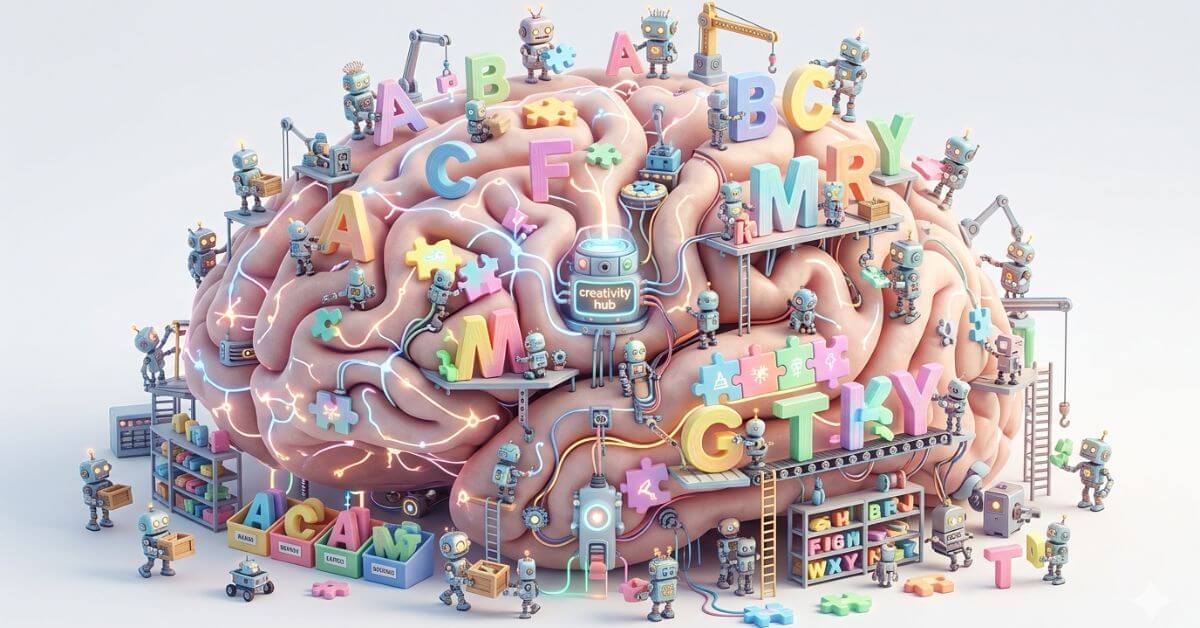
Whether you call them “dad jokes” or clever wordplay, puns are a vital part of human communication. Understanding the different types of puns explained in this guide will help you decode the science behind linguistic wit.
1. Beyond the Dad Joke: The Taxonomy of Puns
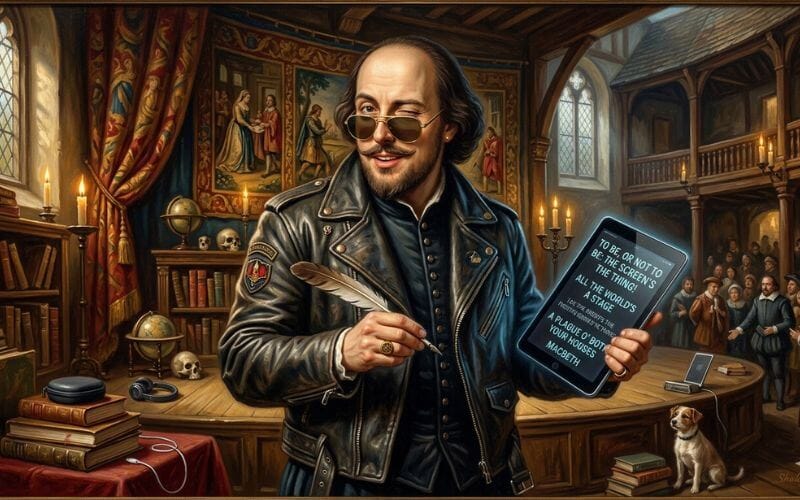
Puns are a sophisticated rhetorical device known technically as Paronomasia. For centuries, literary giants like William Shakespeare used puns to add layers of meaning to their work, proving that a single word can trigger both thought and laughter.
What are the main categories of puns?
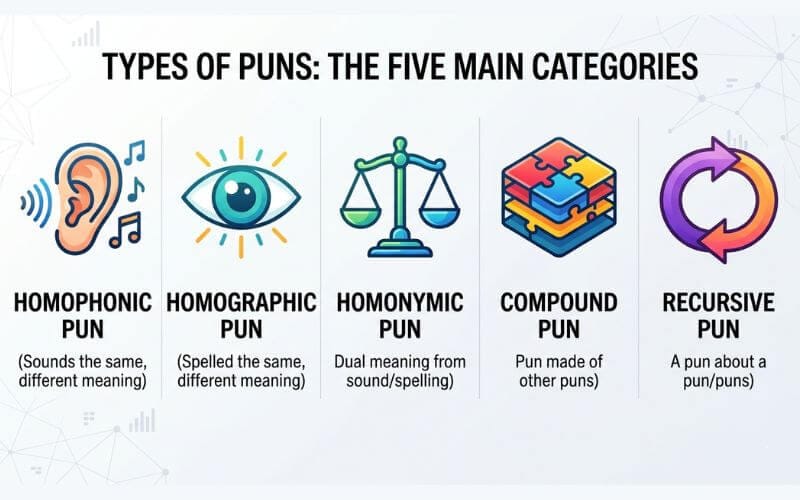
Puns are generally divided into five major categories:
- Homophonic Puns: Based on words that sound the same.
- Homographic Puns: Based on words spelled the same.
- Homonymic Puns: Based on words with the same sound and spelling.
- Compound Puns: Two or more puns layered in one sentence.
- Recursive Puns: Puns that refer back to themselves.
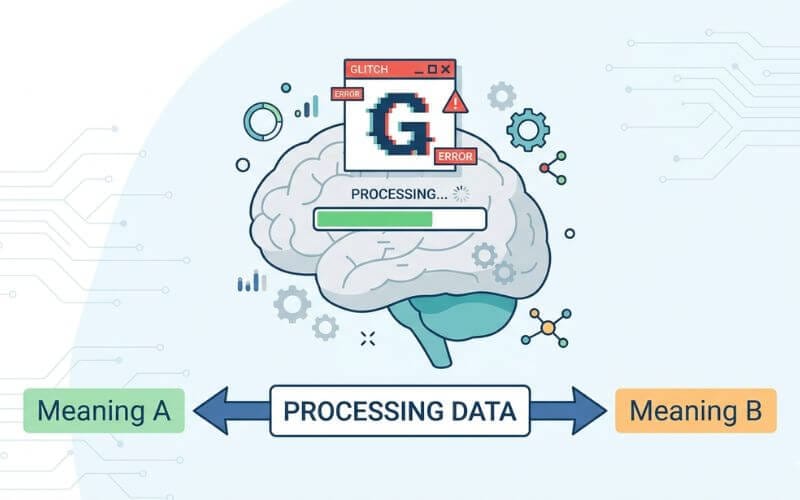
The secret behind why we laugh lies in Semantic Ambiguity, which occurs when a word holds multiple meanings. Your brain experiences a split-second “glitch” where it expects one meaning but discovers another. Resolving this “puzzle” is called Cognitive Conflict Resolution—that tiny mental victory is what results in a smile or a groan.
2. Core Types of Puns Explained
Homophonic Puns
Definition: A Homophonic pun uses words that sound exactly the same but have different meanings and spellings.
The Mechanism:
This type relies on Phonetic Overlap. Because the human ear hears the same sound, the brain must rely on Contextual Awareness to choose the right meaning. The humor arises when the sentence fits the “wrong” spelling perfectly.
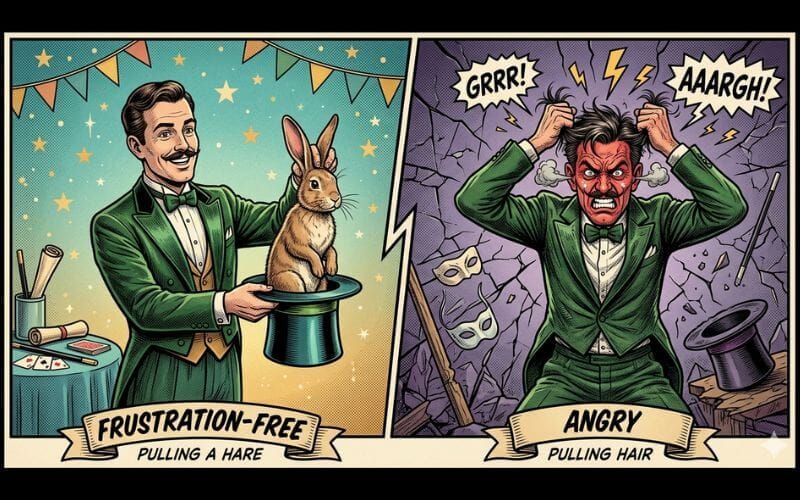
- Daily Life: “The magician got frustrated and pulled his hare out.”
- The Meaning: “Hare” (the animal) sounds exactly like “hair.” It plays on the classic rabbit-out-of-a-hat trick versus a person pulling their hair out in frustration.
- Literature: In Romeo and Juliet, Mercutio says, “Ask for me tomorrow, and you shall find me a grave man.”
- The Meaning: “Grave” means serious, but since he is dying, it also refers to his literal grave.
- Pop-Culture: “Looking for a job as a baker? You might find it a knead-to-know basis.”
- The Meaning: “Knead” (massaging dough) sounds like “need,” implying baking involves trade secrets.
Homographic Puns
Definition: These puns use words that are spelled exactly the same but have different sounds and meanings, also known as Heteronyms.
The Mechanism:
The brain sees a familiar word and assumes the standard pronunciation. The pun works by forcing a Double Entendre where the second, less common pronunciation suddenly makes sense in the sentence.
- Daily Life: “The bandage was wound around the wound.”
- The Meaning: The first “wound” (wrapped) rhymes with sound. The second “wound” (injury) rhymes with mooned.
- Nature: “The desert is a place where a soldier might desert his post.”
- The Meaning: The first word is a dry wasteland (DEZ-ert); the second is the act of leaving (di-ZERT).
- Music: “The bass player caught a huge bass while fishing.”
- The Meaning: One is a low-frequency instrument (base); the other is a fish (bass as in glass).
Homonymic Puns
Definition: These are the “perfect” puns. They use words that have the same spelling AND the same sound, but totally different meanings.
The Mechanism:
This creates Lexical Ambiguity. Since the word is identical in every way, the brain is forced to juggle two separate dictionary entries simultaneously. It is a pure test of Nuance.
- Jobs: “I used to be a baker, but I couldn’t make enough dough.”
- The Meaning: “Dough” is flour mixture for bread, but also a common slang term for money.
- Animals: “A crane accidentally knocked over a crane at the construction site.”
- The Meaning: One is the tall building machinery; the other is the long-necked bird.
- Sports: “I wondered why the baseball was getting bigger. Then it hit me.”
- The Meaning: “Hit” refers to physical impact, but also the sudden “lightbulb moment” of realization in the mind.
Compound Puns
Definition: A sentence containing two or more puns at the same time.
The Mechanism:
This requires Contextual Clustering. You have to resolve two different linguistic puzzles simultaneously for the sentence to make sense.
- Example: “Never trust a train of thought; it might have a loco-motive.”
- The Meaning: Combines “Loco” (Spanish for crazy) with “Motive” (reason), referencing a “Locomotive” (train engine).
Recursive Puns
Definition: A joke where the second part depends on understanding the first part, or it refers back to itself.
The Mechanism:
Relies on background knowledge or what is often called meta-humor. It is like an inside joke with the language itself.
- Example: “A clutch of eggs is a nest egg.”
- The Meaning: Requires knowing that a group of eggs is a “clutch” and a “nest egg” is saved money.
3. Visual and Contextual Puns
Visual Puns
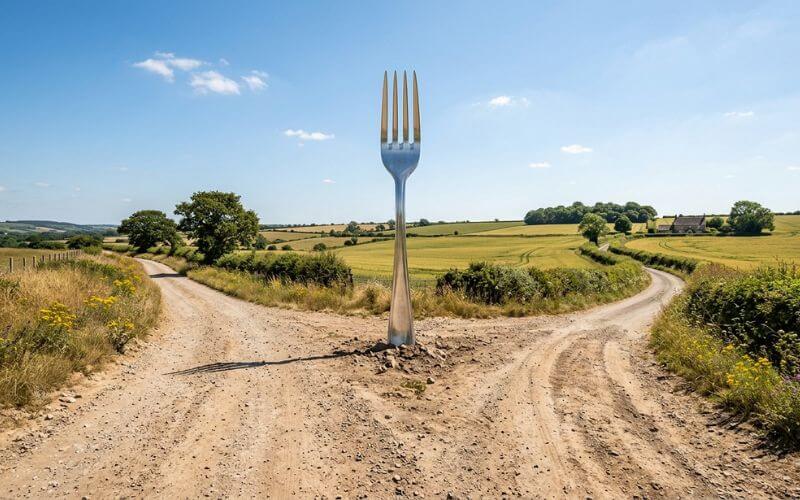
Definition: A joke that uses an image or symbol to show a double meaning.
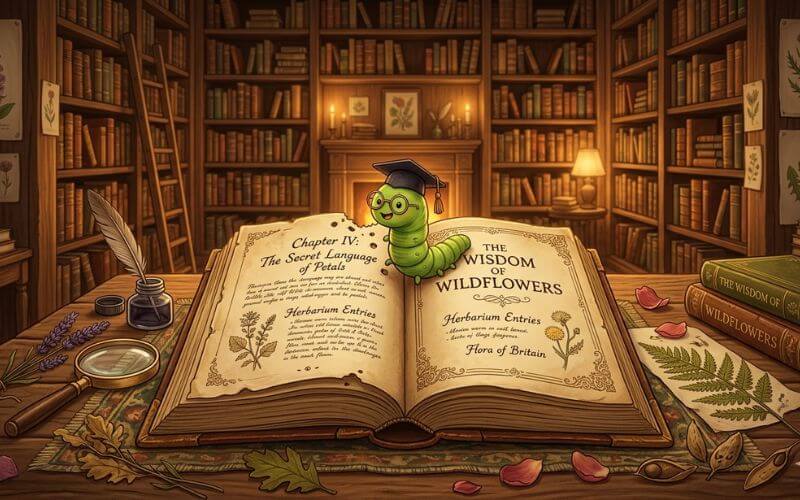
The Mechanism:
Relies on Imagery-Based Cognitive Resolution. Your eyes see an object, but your brain connects it to a common linguistic phrase.
- Daily Life: A picture of a literal “fork” in the middle of a literal “road.”
- Literature: An illustration of a “bookworm” as a literal worm wearing glasses.
- Pop-Culture: An image of cooling fans labeled as a “Fan Club.”
Portmanteau Puns
Definition: Blending two words to create a brand-new funny word (Lexical Blending).
- Daily Life: “That breakfast was truly egg-cellent!” This blends the words excellent and egg.
- Nature: “I’m having a purr-fect day with my cat.” A combination of perfect and purr..
- Pop-Culture: The term “Sharknado” is a blend of shark and tornado.
4. Comparison Table: Quick Reference for Puns
| Pun Type | Focus | Key Difference | Difficulty Level |
| Homophonic | Sound | Different spelling, same sound | Beginner |
| Homographic | Spelling | Same spelling, different sound | Intermediate |
| Homonymic | Both | Same spelling, same sound | Intermediate |
| Compound | Multiple | Two puns in one sentence | Advanced |
| Recursive | Logic | Refers back to itself | Expert |
5. Why Most People Get Puns Wrong
- The “Cringe” Factor: A “bad” pun often feels forced. An expert humorist ensures the pun happens naturally within the flow of context.
- The Power of Placement: For a pun to land, the Pivot Word (the word with two meanings) should ideally come at the end of the sentence.
- Cultural Nuance: Puns are tied to specific languages. An English pun might not work in German or French because the Phonetic Overlap doesn’t exist across borders.
6. How to Identify Pun Types in Literature & Media
Shakespeare’s Mastery
“Now is the winter of our discontent made glorious summer by this sun of York.”
- Analysis: This is a classic Homophonic Pun. He refers to the “Son” of the King while talking about the literal sun. Shakespeare’s use of such wordplay wasn’t just for laughs; it was a way to add layers of meaning to his work, blending political commentary with linguistic wit.
Brand Authority: Marketing with Wit
- Example: Dollar Shave Club uses phrases about their “shaving” grace.
- Analysis: A Homonymic Pun playing on “saving grace” to build brand recall.
7. FAQs
What is the most common type of pun?
The Homophonic Pun is the most common because English has many words that sound the same but are spelled differently (like there, their, and they’re).
Can a pun be a metaphor?
Yes, but they are different. A metaphor compares things directly (“Time is a thief”). A pun specifically uses the multiple meanings of a word to create a joke.
Are all wordplays considered puns?
No. Wordplay includes Alliteration or Anagrams. Puns must specifically rely on Semantic Ambiguity.
8. Conclusion: Mastering the Art of Wordplay
Puns are a display of linguistic skill. Remember the core family:
- Sounds: Homophonic
- Looks: Homographic
- Identical: Homonymic
- Blends: Portmanteau
- Deep Logic: Recursive
By understanding the “why” behind the “wit,” you move from a beginner to a true linguistic expert. Now that you can identify every style, it’s time to start crafting your own. If you’re ready to move from theory to practice, check out our guide on how to write puns step-by-step for beginners.
Keep practicing, and remember: a good pun is its own re-word!

Hi, I’m Emma Rose, the creative founder of Punstation.com. With a background in crafting hundreds of engaging guides and clever wordplay, I specialize in making complex information easy and fun to digest. Whether I’m exploring technical trends, lifestyle ideas, or creating my signature witty puns, my goal is to provide useful, well-researched content that helps solve problems and brings a smile to your face. For me, every topic, from tech to humor, is an opportunity to share clear, practical insights with a fresh perspective.