
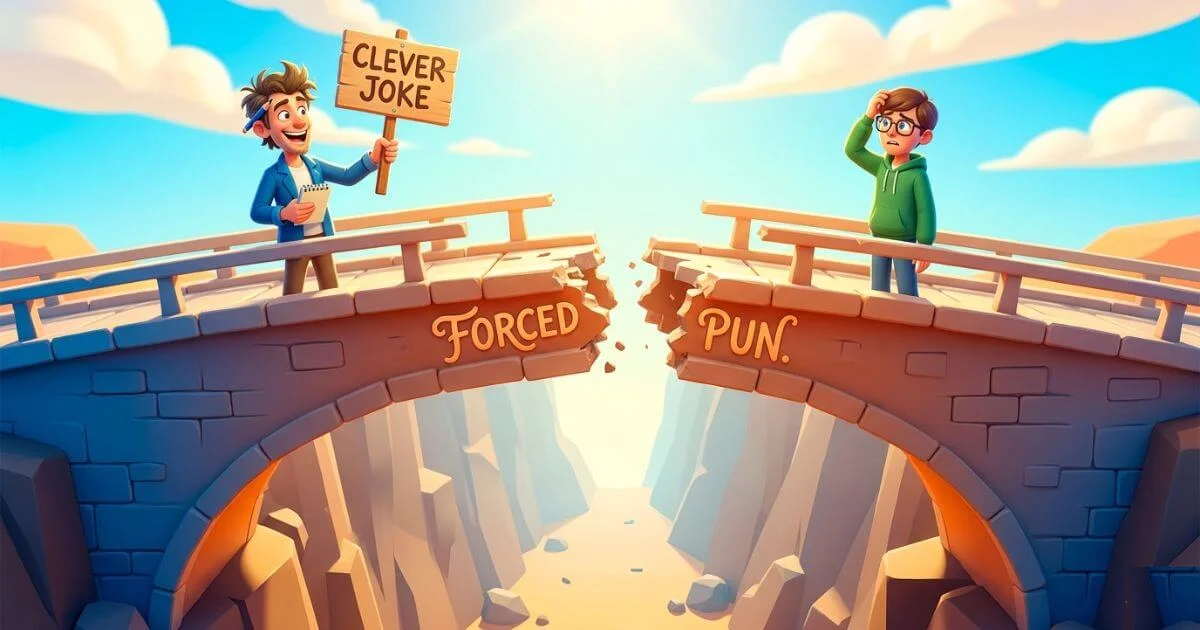
A pun can sound smart in your head—but fail when someone else reads it. That gap is where most pun writing mistakes happen. Many writers think their joke is clear and clever, but the reader may feel confused or miss the meaning.
This is not a creativity problem. It is a clarity problem. When a pun is hard to understand, forced, or placed in the wrong spot, it loses its effect. Weak puns can break flow, lower trust, and make your writing feel less professional. According to marketing research, ads with wordplay had 20% higher recall than straightforward ones, but only when the message remained clear.
Good puns are simple and support the message. In this guide, you will learn the most common pun writing mistakes and how to fix them with real examples and advanced techniques used by professional comedy writers.
Why Even Good Writers Make Pun Writing Mistakes

Even strong writers make pun writing mistakes because of the thinking gap. The writer knows the joke, so they think, “This is obvious.” But the brain reads fast and looks for clear meaning first. If a pun slows that process, the reader skips it.
As explained in Scientific American’s study on how the brain processes wordplay, the brain uses both hemispheres to decode a pun, and any lack of clarity causes the joke to fall flat. High-quality content always puts clarity first. Many writers fail because they skip testing or prioritize “sounding clever” over being understood. To write like an expert, you must always think from the reader’s point of view.
If you are just starting out, understanding the step-by-step process of how to write puns can help you avoid the thinking gap from the beginning.
1. Forcing the Pun Instead of Letting It Flow
Writers often bend a sentence just to fit a pun. The result feels strange.
- ❌ Bad example: “The meeting was a real ‘board’ situation for the team.”
- ✅ Better example: “The meeting felt like a boardroom battle—everyone had a different move.”
- Practical fix: Write your sentence normally first. Only add a pun if it fits without disturbing the flow.
2. Using Obscure Wordplay
A pun only works if the reader understands it instantly.
- ❌ Bad example: “This idea is quite ‘esoteric-ally’ funny.”
- ✅ Better example: “This idea is simply funny—it works on more than one level.”
3. Overloading Content
Too many puns make reading tiring. One strong pun is always better than five weak ones.
- ❌ Bad example: “This blog is a real ‘write’ hit, with ‘pen’-tastic ideas that will ‘draw’ you in.”
- ✅ Better example: “This blog is a real writing hit. One idea stands out and keeps readers engaged.”
4. Ignoring Context and Audience Intent
A pun must match the topic. Snickers’ campaign “You’re not you when you’re hungry” uses mild wordplay with identity—a masterclass in subtle punning that fits the brand perfectly.
- ❌ Bad example (formal): “Our data strategy was ‘data-lightful’ this quarter.”
- ✅ Better example: “Our data strategy improved this quarter, with clearer results.”
5. Weak Setup and Poor Timing
- ❌ Bad example: “He was shocked. It was electric.”
- ✅ Better example: “He touched the live wire by mistake—and the shock was truly electric.”
6. Repeating Clichés
- ❌ Bad example: “I’m reading a book on anti-gravity—it’s impossible to put down.”
- ✅ Better example: “Being a tailor is a seamless transition for someone with a stitched-together career.”
Advanced Pun Strategies for High-Level Writing
Technique 1: The Rule of Three
Use two normal sentences to build a pattern, then drop the pun in the third.
- Sentence 1: We reviewed the architectural plans for the new office.
- Sentence 2: The team discussed the budget and structural materials.
- Sentence 3: In the end, we decided the design was simply groundbreaking.

Technique 2: Visual Punning
Combine an image with text for high-conversion ads. Old Spice used absurdist humor and puns to increase sales by 107% in 2010.
- Example: A juice ad shows an orange wearing sunglasses.
- Pun Text: “Squeeze the day.”
Technique 3: Phonetic Puns
These rely on words that sound the same but are spelled differently.
- Example: “I scream” vs. “Ice cream.” These work best when the context allows the reader to “hear” the joke.
To master these, you should explore the different types of puns like homophonic and compound wordplay.
Technique 4: Headlines vs. Body Text
Puns in headlines grab attention instantly. In body text, they must be used sparingly so they don’t interrupt the reader’s flow.
Technique 5: The Misdirection Technique
Professional comedy writers lead the reader in one direction and then provide a surprise. This works by setting a serious tone and then twisting the final word to reveal a double meaning.
- Example: “The company’s social media manager was excellent at his job—until he was fired for his lack of posts.” (The reader expects a performance issue, but the pun reveals a literal problem with social media content).
When NOT to Use Puns
Expert writers know when to stop. Avoid puns in these situations:
- Grief or sensitive topics: It comes across as disrespectful.
- Legal or medical content: Accuracy is more important than humor.
- Breaking news: Humor is usually inappropriate for serious events.
Quick Checklist to Avoid Mistakes
- Is the pun easy to understand in one read?
- Does it fit naturally inside the sentence?
- Is it related to the topic you are writing about?
- Does it follow the Rule of Three or match the Visuals?
- Is it original and not a cliché?
- Have you tested it on someone else to see their reaction?
Before you hit publish, it’s important to understand the fundamental criteria for what makes a good pun in high-quality content.
Final Thoughts
Good puns work only when they stay clear and simple. The best writers focus on the message first and add humor only when it fits naturally. When puns become forced, they create confusion instead of impact.
Today’s readers prefer easy and smart humor that feels natural, not heavy or forced. That is why avoiding pun writing mistakes is important if you want better engagement and clear communication.
In simple terms, strong pun writing is about balance. Use humor only when it supports meaning, not when it distracts from it. If you master this balance, your writing becomes clearer, more engaging, and easier to remember.
FAQs
What are the most common pun writing mistakes?
Forced wordplay, unclear meaning, overusing puns, and poor timing.
Do puns hurt SEO?
No, if used naturally. Search engines reward engaging content, and a well-placed pun can increase time-on-page.
What is the difference between a pun and wordplay?
All puns are wordplay, but not all wordplay is a pun. Puns specifically exploit the double meanings of words.
Should I use puns in professional writing?
Yes, but only if they are “seamless” and do not distract from the main information.

Hi, I’m Emma Rose, the creative founder of Punstation.com. With a background in crafting hundreds of engaging guides and clever wordplay, I specialize in making complex information easy and fun to digest. Whether I’m exploring technical trends, lifestyle ideas, or creating my signature witty puns, my goal is to provide useful, well-researched content that helps solve problems and brings a smile to your face. For me, every topic, from tech to humor, is an opportunity to share clear, practical insights with a fresh perspective.