
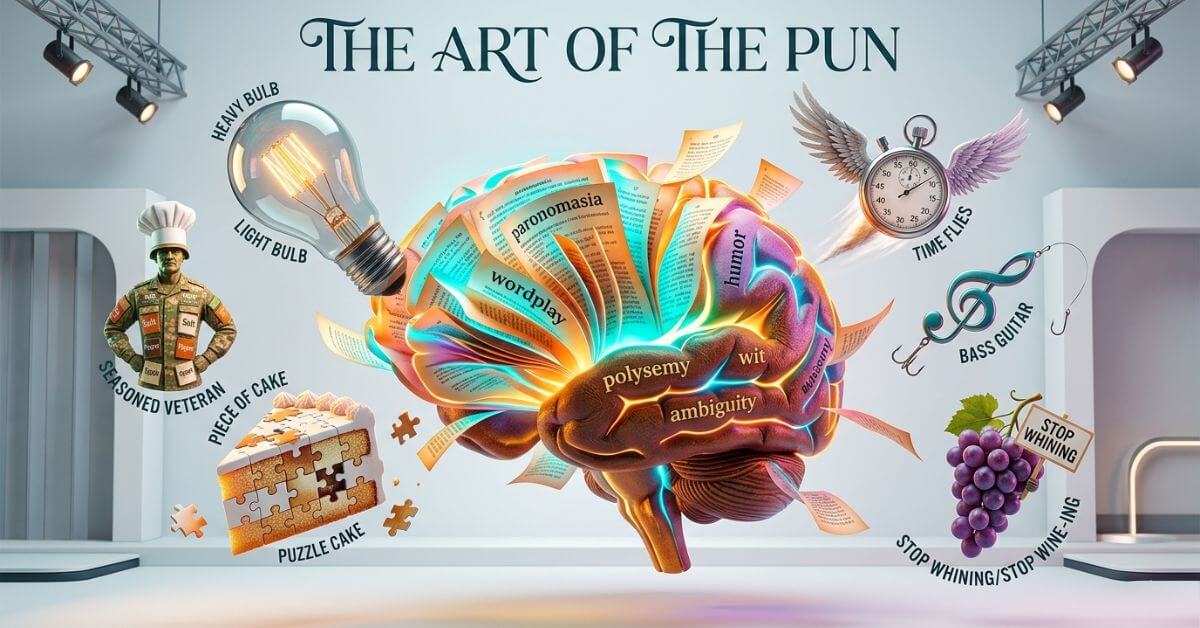
I was going to look for my missing watch today, but I realized I just couldn’t find the time. If that sentence made you chuckle (or even groan), you have just experienced the power of wordplay. Puns are a universal language of wit, yet not every play on words hits the mark.
Many people wonder what makes a good pun truly effective while others fall flat. It isn’t just about being “punny”; it is about the clever intersection of logic and surprise. Below, we uncover the elements that turn simple wordplay into a masterpiece of wit.
Understanding the Basics: What Exactly is a Pun?
To appreciate wordplay, we must first understand its technical DNA. In linguistics, a pun is known as paronomasia. It is a sophisticated rhetorical device that exploits the multiple meanings of a word (polysemy) or the similar sounds of different words.
Puns are far from being “low-brow” humor. In fact, a famous quote often attributed to the legendary filmmaker Alfred Hitchcock claims, “Puns are the highest form of literature.” This high praise highlights that creating a pun requires linguistic flexibility and a deep grasp of vocabulary. A pun works by forcing the brain to process two conflicting meanings simultaneously, resulting in a quick mental “aha!” moment.
The Core Elements of a Good Pun
What separates a world-class pun from a forgettable one? It comes down to a few specific “ingredients” that satisfy the listener’s brain.
Linguistic Ambiguity
The heart of every pun is ambiguity. This happens when a single word or phrase carries two distinct weights. For example, the word “bank” can refer to a river’s edge or a financial institution. A good pun uses this dual nature to create a bridge between two unrelated ideas, catching the audience off guard.
Phonetic Overlap
Sometimes, the humor doesn’t come from the spelling, but from the sound. This is known as phonetic overlap. When two words sound nearly identical (like soul and sole), the ear hears one thing while the mind discovers another. This “near-miss” in sound is what often triggers that classic punny groan.
Perfect Contextual Timing
A pun is only as good as its setup. Contextual relevance means the pun must fit the conversation naturally. If you are talking about gardening and drop a joke about “thyme,” it lands perfectly. Without the right context, even the cleverest wordplay feels forced and loses its impact.
The Surprise Reveal
The most vital element of a good pun is the cognitive shift. This is the split-second moment when the listener realizes they’ve been “tricked” by a double meaning. A high-quality pun leads the listener down one path, only to reveal a hidden trapdoor at the very end.
The Historical Authority of Wordplay
Puns are often dismissed as simple jokes, but history suggests otherwise. To truly understand what makes a good pun, we must look at the masters of literature.
The Shakespeare Standard
William Shakespeare was the undisputed king of wordplay. According to linguistic research maintained by the Folger Shakespeare Library, scholars have identified upwards of 3,000 puns across his plays, proving that linguistic humor is a mark of genius rather than just simple “dad jokes.”
Cultural Significance and “Sticky” Ideas
Beyond the stage, puns have significant cultural weight. In marketing and literature, puns are used to create “sticky” ideas—concepts that are easy to remember because of their cleverness. From ancient Greek rhetoric to modern-day advertising slogans, the ability to twist a phrase has always been a powerful way to capture human attention and boost authority.
Types of Puns Every Humor Lover Should Know
Understanding different categories helps in identifying the specific elements of a good pun.
- Homophonic Puns: These rely on words that sound the same but have different meanings.
- Example: “The ghost was a successful author because he was great at writing boos.”
- Homographic Puns: These use words that are spelled exactly the same but carry different definitions.
- Example: “A short fortuneteller who escaped from prison was a small medium at large.”
- Compound Puns: A layered form of humor where a single sentence contains two or more puns. These are highly prized for their complexity.
- Visual Puns: Often found in memes or logos, these use imagery to trigger a punny response without needing a full sentence of text.
The Visual Twist: Wordplay Beyond Words
While most paronomasia relies on auditory or spelling similarities, Visual Puns are the rockstars of modern internet culture. They use imagery to create the same cognitive conflict as spoken wordplay, often forcing our brains to decode a literal interpretation of a common phrase.
Here is how visual elements can trigger a punchline without saying a single word:
Literal Interpretation in Art
By taking a common idiom and depicting it literally, artists create an instant “aha!” moment. This form of humor is highly effective in marketing because it is instantly recognizable and memorable.
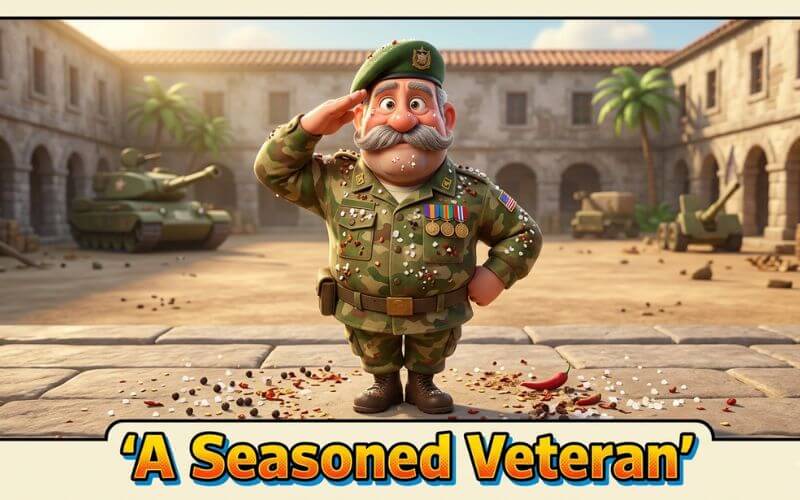
Analysis: This visual works by merging the military definition of ‘seasoned’ (experienced) with the culinary one (spiced), creating a humorous clash of contexts.
H3: The Power of Visual Tropes
Visual puns often play with our expectations of how objects should behave. When an inanimate object—like a piece of food—takes on human characteristics, the incongruity leads to humor.
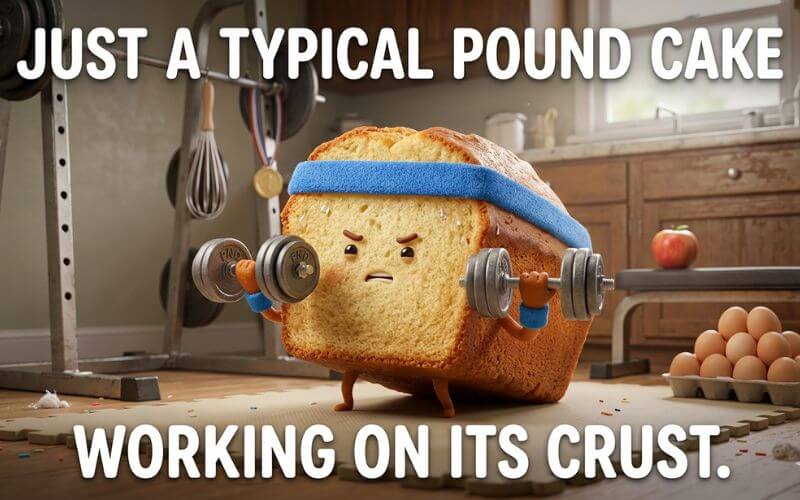
Analysis: The humor here is multi-layered. It plays on the name ‘Pound Cake’ (weight) and the double meaning of ‘crust’ (the cake’s exterior vs. a human’s tough outer shell).
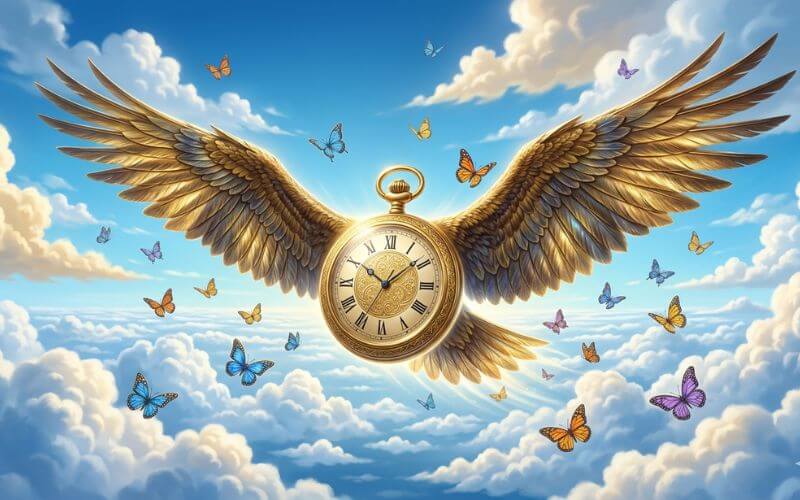
Analysis: A classic example where the abstract concept of time passing quickly is given physical form through wings, making the metaphor concrete.
The Psychology of Why We Laugh
Cognitive Conflict Resolution
When you hear a pun, your brain faces a sudden “conflict.” It hears one word but recognizes two potential meanings. The laughter (or the groan) is the result of cognitive conflict resolution—that split second where your brain “solves” the puzzle.
Incongruity Theory
Psychologists often use Incongruity Theory to explain humor. It suggests we laugh when there is a mismatch between our expectations and reality. A pun leads you down a logical path and then suddenly takes a sharp turn, forcing your brain to reset.
The Social Handshake
Puns act as an intellectual handshake. Sharing a pun is a way of testing the listener’s vocabulary and quick-thinking skills. When the listener “gets it,” a social bond is formed through shared intelligence.
How to Write a High-Quality Pun (Step-by-Step)
- Step 1: Pick a Theme: Choose a specific niche (e.g., Gardening).
- Step 3: Build a Word Bank: List related terms (Soil, Plant, Root, Thyme, Leaf).
- Step 3: Identify Double Meanings: Look for phonetic matches (e.g., “Thyme” sounds like “Time“).
- Step 4: Create the Bridge: Link the meanings in one punchy sentence.
- Result: “I’m not sure if I can win the gardening contest, but I’m willing to give it some thyme.”
Examples of “Elite Tier” Puns with Analysis
To truly see what makes a good pun effective, we must analyze the mechanics of the best examples.
Example 1: The Anti-Gravity Book
“I’m reading a book about anti-gravity. It’s impossible to put down.”
Why it works: This pun succeeds because of the dual meaning of the phrase “put down.” Literarily, it means to stop reading; scientifically, it refers to the effect of gravity. The bridge between a common reading habit and a physics concept is seamless and surprising.
Example 2: The Stationary Bicycle
“A bicycle can’t stand on its own because it is two-tired.”
Why it works: This is a classic phonetic pun. Our brain expects the phrase “too tired” (exhaustion), but the context of a bicycle forces us to realize the word is actually “two-tired” (having two wheels). This rapid mental switch is what triggers the humor.
Common Mistakes: What Makes a Pun “Bad”?
Avoid these pitfalls to maintain your expertise:
- The Over-Explain: If you have to explain the pun, it has failed. The joy is in the discovery.
- Forced Puns: When the logic doesn’t click, the pun feels “cringe” rather than clever.
- Lack of Audience Awareness: Using obscure jargon ensures no one connects with your wit.
Frequently Asked Questions
Why are puns called the “lowest form of wit”?
This phrase is often misunderstood. While some see puns as simple, creating a high-quality pun requires immense linguistic flexibility. Great minds like Shakespeare used them to add layers of meaning, proving they are a sophisticated form of intellect.
Can puns improve your vocabulary?
Yes. Because puns rely on double meanings and phonetic similarities, they encourage you to explore the depth of language, including synonyms, homophones, and nuances.
What is the difference between a pun and a double entendre?
A pun is generally for humor or cleverness. A double entendre specifically involves one innocent meaning and one that is suggestive or risqué. All double entendres are puns, but not all puns are double entendres.
Conclusion
Puns are much more than just “dad jokes”—they are a vibrant part of human communication that showcases our brain’s ability to process language creatively. By understanding what makes a good pun, from phonetic overlap to perfect timing, you can elevate your wit and engage your audience effectively.
Next time you hear a pun that makes you groan, remember: you’ve just witnessed a tiny piece of linguistic magic.
What’s the best pun you’ve ever heard? Drop it in the comments below and let’s see who has the sharpest wit!

Hi, I’m Emma Rose, the creative founder of Punstation.com. With a background in crafting hundreds of engaging guides and clever wordplay, I specialize in making complex information easy and fun to digest. Whether I’m exploring technical trends, lifestyle ideas, or creating my signature witty puns, my goal is to provide useful, well-researched content that helps solve problems and brings a smile to your face. For me, every topic, from tech to humor, is an opportunity to share clear, practical insights with a fresh perspective.