
last Updated: 27/August/2026
How can ShotScribus software help the environment?
ShotScribus may help reduce environmental waste through digital work. It can replace some printing, travel, packaging, and other physical processes. However, I could not find a trusted official source confirming ShotScribus as an established software product. Digital tools also use electricity and can contribute to e-waste. So, the environmental benefit depends on how the software is used and what it replaces.
In simple terms, digital software can help reduce paper waste, unnecessary printing, travel, and physical deliveries. But digital tools are not completely eco-friendly. Computers, networks, and cloud services also use energy.
What Is ShotScribus Software?
I could not find a trusted official source confirming ShotScribus as an established software product. Its developer, official documentation, and download source are also unclear. Some web pages suggest ShotScribus may be a mix-up involving Scribus and Shotcut.
That means readers should be careful with claims about ShotScribus environmental benefits, features, or safety.
ShotScribus, Scribus, and Shotcut are different names
ShotScribus is an unconfirmed name, while Scribus and Shotcut are established projects.
| Name | What it is | What to know |
|---|---|---|
| ShotScribus | No trusted official source was found during this review | Do not assume online claims are true |
| Scribus | Open-source desktop publishing software | Used for page layout and publishing |
| Shotcut | Free, open-source video editor | Used for editing video |
Scribus is an established open-source desktop publishing project. Shotcut is also an established open-source video editor and describes itself as a free, open-source, cross-platform video editor.
The similar names can cause confusion. The Scribus website does not identify ShotScribus as Scribus. The Shotcut website does not identify ShotScribus as a Shotcut product.
How to verify a software product
Before downloading unfamiliar software, check a few basic things:
- Find the official developer. Look for a clear developer, project team, or organization behind the product.
- Check the official website. Look for product details, documentation, and support.
- Check the download source. Do not rely on a random download page.
- Look for a release history. Active software usually provides update or release information.
- Compare the name with trusted sources. A small spelling difference may refer to a different product.
- Be careful with security claims. Do not install a program simply because a search result says it is useful or “green.”
For Scribus, start with the official project site and its official download information. For Shotcut, use the official Shotcut website and its download page.
The key lesson is simple: verify the software before judging its environmental impact.
How Legitimate Digital Workflows Can Help the Environment
If you are really asking how digital publishing software can support a greener process, there are several practical answers.
The benefit usually comes from what the software replaces. A digital workflow can reduce paper, transport, or repeated work when it replaces those activities.
It does not make those savings automatically.

Reduce paper and printing
One possible benefit is reducing unnecessary printing.
A publishing team can review drafts on a screen instead of printing every version. The same idea can work for scripts, storyboards, schedules, brochures, reports, and other documents.
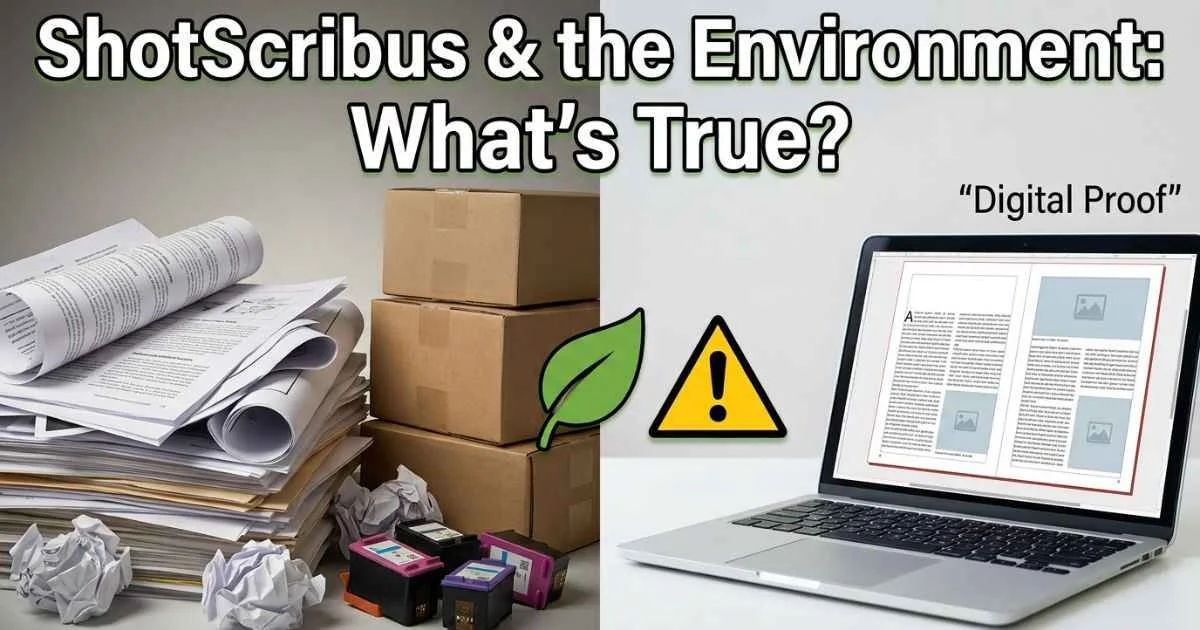
Electronic proofing means checking a digital version before making the final printed copy.
Example only: Imagine a team preparing a brochure. Instead of printing several draft versions for everyone, the team can share a PDF and review it on their devices. Only the approved version needs to go to print.
This may reduce some paper, ink, packaging, and draft waste.
It does not mean all printing should stop. Some projects still need printed copies. The goal is to avoid printing that does not add value.
Reduce travel and physical deliveries
Digital files can also reduce the need to move people and materials.
A designer can send a PDF to a client for review. The client can add comments and return the file online. A team can approve a layout without meeting in person just to look at one document.
This may reduce some trips and courier deliveries when digital sharing replaces them.
The same idea can apply to production teams. Digital schedules, files, and approvals may reduce the need to send physical proofs, storage devices, or paperwork between locations.
But online work still has an environmental cost. Computers, internet networks, and servers all use electricity.
Reduce failed print jobs and wasted work
A digital review process may help teams find mistakes before final production.
In a general digital publishing workflow, a team can check page size, text, images, layout, and other details before sending a file to a printer. This may lower the chance of printing a large batch with a mistake.
The same principle applies to creative production. Better planning may help reduce unnecessary work, but software alone cannot guarantee fewer reshoots or failed projects.
The useful question is:
Did the workflow prevent something that would otherwise have been wasted?
That is a better environmental measure than simply saying a piece of software is “eco-friendly.”
Improve resource planning
Digital tools can also make it easier to reuse materials.
Some digital workflows allow teams to organize templates and project files. This may reduce duplicate work and help people find existing materials.
For example, a publisher might reuse a well-designed newsletter template instead of creating a new layout from scratch each month. This is an example, not a measured environmental result.
This does not prove a carbon saving by itself. It simply creates a chance to use fewer resources.
Workflow action, possible benefit, and limitation
| Workflow action | Possible environmental benefit | Important limit |
|---|---|---|
| Digital drafts | Fewer test prints | Devices still use electricity |
| Electronic proofing | Less paper and ink waste | Some final printing may still be needed |
| Online approvals | Fewer trips or deliveries | Networks and devices use energy |
| Digital file sharing | Less physical transport | Cloud storage needs power |
| Better layout checks | Fewer failed print jobs | Software cannot prevent every mistake |
| Reusing templates | Less repeated work | Savings depend on actual use |
| Longer device life | Less demand for replacement devices and related waste | Some old devices may become slow or lose software support |
The main idea is clear: the environmental gain comes from changing the workflow.
What Environmental Benefits Are Not Proven?
This is where many software articles go too far.
It is easy to say, “Digital software reduces carbon emissions.” But that claim needs evidence. A software tool does not have one fixed environmental impact for every user.
Digital Does Not Mean Impact-Free
Every digital workflow has a footprint.
Your computer uses electricity. If you use cloud storage, your files may be stored in data centers. Data also moves through networks when files are uploaded, downloaded, or shared. International Energy Agency: Data Centres and Data Transmission Networks
The International Energy Agency estimates that data centers used about 1.5% of global electricity in 2024. It also projects that data center electricity use could reach about 945 TWh by 2030.
That does not mean cloud software is bad. It means cloud computing should be included when thinking about the full environmental picture.
When devices are thrown away instead of reused or recycled, they can add to the e-waste problem. U.S. EPA: Electronics Donation and Recycling

Local processing versus cloud processing
Local processing means the work happens mainly on your own computer.
Cloud processing means some work happens on remote servers.
It may seem that local software must always be greener because it avoids some server use. That is too simple.
Your computer still uses electricity. Cloud energy use can vary by provider, location, workload, and data center. The total impact can also change based on how the software, device, network, and storage are used.
So avoid claims such as:
“Local software has zero carbon impact.”
A safer statement is:
“Local processing may reduce some cloud-related activity, but the total impact depends on how the software, device, network, and storage are used.”
Print versus digital depends on usage
Digital and print can have different environmental impacts, depending on how they are used.
Consider two examples.
A short document may use less storage than a large file, depending on its format and backups. A large file may use more storage and network resources when shared repeatedly.
On the other hand, printing many drafts and throwing them away creates clear material waste.
The right choice depends on how the material will be made, shared, stored, viewed, and used.
A Lower-Waste Digital Publishing Workflow
You do not need unverified software to make your publishing process more sustainable.
Try this simple workflow instead:
- Confirm the software source before installing it.
- Create one shared project folder so people do not make needless copies.
- Use digital drafts and on-screen proofing before printing.
- Remove unnecessary duplicate files when they are no longer needed. Removing unnecessary files may reduce storage needs.
- Keep devices longer and repair or upgrade them when practical.
- Use sensible file sizes and image resolution instead of making every file huge. Smaller files may reduce storage and transfer needs, although the saving depends on use.
- Print only the final approved version when a paper copy is needed.
- Reuse templates and layouts when they still work.
- Follow local rules for recycling paper, cartridges, and electronics.
- Measure the results after the project.
This workflow focuses on actions that may reduce waste.
If you use Scribus, for example, it can be used in a digital publishing workflow. If you use Shotcut for video, it can be used for digital video editing. But neither product should be called “green” simply because it is digital.
How to Measure the Environmental Impact
If you want to make a real environmental claim, measure what changed.
Start with simple numbers.
Useful measurements
Track:
- Pages that were not printed
- Physical deliveries avoided
- Travel miles avoided
- Failed print runs prevented
- Devices reused
- Duplicate files removed
- Print jobs reduced
- Materials reused
- Electricity use where it can be measured
A basic project review can use simple counts, but formal carbon claims need stronger methods.
For example, a small publisher might compare the number of draft pages printed before and after changing its workflow.
That tells you the number of pages changed. It does not automatically tell you the exact carbon saving.
Avoid unsupported carbon calculations
Carbon estimates usually require more assumptions than page counts.
If you estimate emissions, explain:
- What you measured
- Where the data came from
- What assumptions you made
- Which numbers are estimates
- Which numbers are directly measured
Do not turn a rough estimate into a universal fact.
For example, a claim like “this software cuts carbon by 40%” is an unsupported claim unless it has a clear method and reliable data. Without that, it is better to say the workflow may reduce emissions.
This difference matters when readers are trying to make real sustainability decisions.
Safer Verified Alternatives
If you searched for ShotScribus because you need publishing or video software, use an established product instead.
| Need | Established option | What to check |
|---|---|---|
| Desktop publishing | Scribus | Official project source and current release |
| Video editing | Shotcut | Official project source and supported system |
| Commercial page layout | Adobe InDesign | Current price and license |
| Commercial page layout | Affinity Publisher | Current price and license |
| Online graphic design | Canva | Cloud use, account needs, and storage |
Use Scribus as an established desktop-publishing option, downloaded from its official source. Use Shotcut as an established video-editing option, downloaded from its official source.
Adobe InDesign is a commercial page-layout option. Affinity Publisher is another commercial page-layout option. Canva is an online graphic design tool.
Scribus is an established open-source desktop publishing project. Shotcut is an established open-source video editor. Their official project sites provide information about their software and downloads.
For current versions, features, prices, and download choices, always check the official source before installing software.
Do not assume an alternative is better for the environment just because it is open-source, free, local, or cloud-based. Those details can matter, but they do not tell the whole environmental story.
Frequently Asked Questions
Is ShotScribus a real software program?
I could not find a trusted official source confirming ShotScribus as an established software product. Some web pages suggest it may be a mix-up involving Scribus and Shotcut.
Is ShotScribus the same as Scribus?
No. Scribus is a real open-source desktop publishing application. Scribus is a separate, established open-source desktop publishing application, and its official website does not identify ShotScribus as Scribus.
Is ShotScribus related to Shotcut?
Shotcut is a separate, established open-source video editor, and its official website does not identify ShotScribus as a Shotcut product.
Can digital publishing reduce paper waste?
Yes, when digital drafts and electronic proofing replace unnecessary test prints. The benefit depends on how the workflow is used.
Does cloud software help the environment?
It may reduce some physical travel, printing, or delivery needs when it replaces those activities. But cloud computing also uses electricity for data centers, networks, and storage.
Is digital publishing always greener than print?
No single answer applies to every use. Digital and print can have different environmental impacts, depending on how they are used.
How can software reduce travel emissions?
Digital file sharing and remote approvals may reduce some travel when they replace meetings or deliveries.
How can I safely download publishing software?
Use the official developer or project website. Check the domain, release information, and download instructions before installing anything. For Scribus, use its official download information. For Shotcut, use its official download page.
Conclusion: Use Evidence, Not Marketing Claims
So, how can ShotScribus software help the environment? At present, I could not find a trusted official source confirming ShotScribus as an established product. Based on the sources reviewed, there is not enough product information to support that claim.
The bigger lesson is still useful. A legitimate digital workflow may reduce unnecessary printing, travel, deliveries, failed output, and material waste when it replaces physical activities. But computers, cloud services, electricity use, hardware production, and e-waste also matter.
The best approach is simple: verify the software, use trusted tools, reduce waste where you can, and measure the changes.
That is a stronger environmental strategy than calling any software “eco-friendly” without evidence.
You May Also Like:
Droven. io Software Development Tips: Planning to Launch
Zavalio Com: What the Website Actually Is | Fact-Checked Guide

Hi, I’m Emma Rose, the creative founder of Punstation.com. With a background in crafting hundreds of engaging guides and clever wordplay, I specialize in making complex information easy and fun to digest. Whether I’m exploring technical trends, lifestyle ideas, or creating my signature witty puns, my goal is to provide useful, well-researched content that helps solve problems and brings a smile to your face. For me, every topic, from tech to humor, is an opportunity to share clear, practical insights with a fresh perspective.