

What Does Çbiri Mean?
Çbiri is not a real word. It is not a food, a game, or a cultural tradition. It is simply a very common typing mistake for the Turkish word çeviri, which means “translation” in English.
The correct spelling is çeviri — pronounced cheh-VEE-ri. Every month, a large number of people accidentally type çbiri instead of çeviri while trying to find a translation tool or look up a Turkish word.
Çeviri Meaning in Turkish (What You Were Actually Looking For)
Çeviri is an everyday Turkish word. It means translation.
People use it constantly — for translating documents, watching subtitled videos, using phone apps, and converting text from one language to another.
Here is a simple example:
“Bu metnin çevirisi lazım” = “This text needs translation”
The word is officially listed in the TDK — Türk Dil Kurumu dictionary. TDK is Turkey’s official language authority, the same way Merriam-Webster is for English. If a word is not in TDK, it is not a real Turkish word. Çbiri is not in TDK. Çeviri is.
How to Pronounce Çeviri Correctly
A lot of people are not sure how to say this word out loud. Here is a simple breakdown:
Çeviri = cheh-VEE-ri
Say it in three parts:
- Çe → sounds like “cheh” (like the start of “check”)
- vi → sounds like “vee” (like the letter V)
- ri → sounds like “ri” (short and soft)
Put it together: cheh-VEE-ri
The stress falls on the middle part — VEE. This is the same word used inside the name Google Çeviri, which is what Turkish speakers call Google Translate.
Why People Type Çbiri Instead of Çeviri
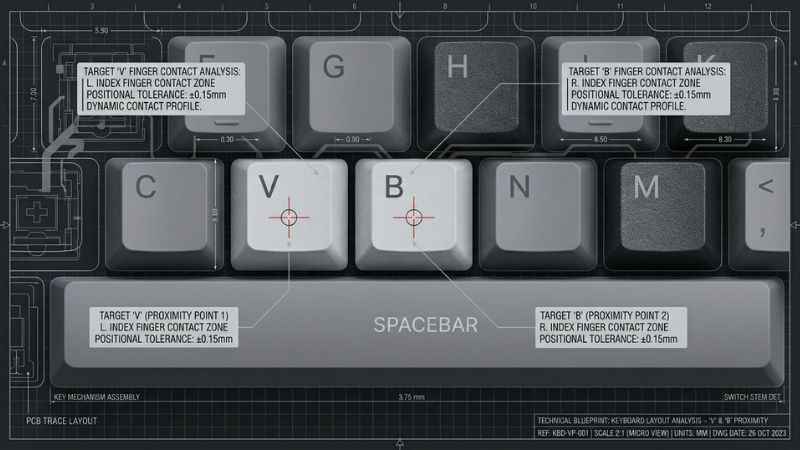
This mistake happens for a very simple reason: the V key and the B key are right next to each other on a standard QWERTY keyboard.
Look at any keyboard. On the bottom row, the letters go: C — V — B — N — M. The V and B sit side by side with no gap. When you type fast — especially on a phone — your finger can easily hit B instead of V. The result: çeviri becomes çbiri.
This problem gets worse on mobile phones. On small touchscreens, the keys are closer together and your thumbs cover more area. One slightly off tap and the wrong letter goes in.
Turkish also uses special characters that most non-Turkish keyboards do not have by default: ç, ı, ğ, ö, ş, ü. When someone is already working around these unusual letters, small errors like V-to-B swaps become even more likely.
Some other common Turkish translation typos people make include:
- ceviri (missing the ç)
- çevri (missing the middle i)
- çevirii (extra i at the end)
- çbiri (this one — v replaced by b)
All of these lead people to the same place: a search engine that does not know what they meant to type.
Why Fake “Çbiri Food” and “Ancient Game” Articles Are Everywhere
If you searched çbiri and found articles claiming it is a Mediterranean dish or an ancient Central Asian board game — those articles are completely made up.
Here is exactly how this happens.
When a word has no real meaning, it creates what is called a data void. A data void is a gap in search results — a topic where almost no content exists. Search engines struggle to fill these gaps.
Automated content websites — sometimes called AI content farms — constantly scan for these empty spots. They find words like çbiri that have zero real information attached to them. Then they use AI tools to generate fake definitions, fake histories, and fake cultural stories — all designed to look real enough to rank in search results.
The “Mediterranean dish” story was not researched. A bot pulled fragments from unrelated food articles and attached them to the word çbiri. The “ancient Central Asian board game” story was generated the same way — AI producing historical-sounding sentences with no basis in reality.
These websites are not trying to inform you. Their only goal is to get clicks and earn advertising revenue. The content is a means to that end, not the point of it.

Fake Claims vs. Real Facts
| Claim | Source | True? |
|---|---|---|
| Çbiri is an ancient board game | AI spam blogs | ❌ False |
| Çbiri is a Mediterranean dish | AI spam blogs | ❌ False |
| Çbiri is a typo of çeviri | TDK + Google | ✅ True |
| Çeviri means translation | TDK Official Dictionary | ✅ True |
Why Does Google Show These Fake Results for Çbiri?
Seeing fake results in Google can feel alarming. It is not your device. It is not a virus. It is not something wrong with your account. This happens to everyone who searches this word.
Here is the simple explanation.
Google works by crawling the web and indexing content that already exists. When a word like çbiri appears in searches but has no real, authoritative content attached to it, Google faces a problem: it has to show something. The data void gets filled by whatever content ranks — and right now, that content is being produced by AI spam sites.
Google is working on getting better at this. Its systems are improving at identifying real-world entities — things that actually exist — versus words that are just typos or fabrications. But for small, obscure typos like çbiri, these systems have not yet caught up.
The honest answer is: the fake articles are ranking because nothing better has been published yet. That is a gap in the internet, not a flaw in your device.
Is It Safe to Visit Çbiri Ranking Websites?
Most of the websites currently ranking for çbiri are not dangerous in a serious way, but they are not clean either.
These sites typically run heavy ad networks. The moment you land on one, you may see multiple pop-up windows, auto-playing video ads, and redirect buttons designed to look like regular links. Clicking the wrong thing can send you to a different site entirely — sometimes one pushing low-quality products or browser extensions you do not want.
Two simple rules protect you:
- Use an ad blocker. Browser extensions like uBlock Origin block most of these ads and pop-ups before they load.
- Apply the back button rule. If you land on a page and the content makes no sense — or it is claiming çbiri is a food or a game — press back immediately. Do not click anything on the page.
No real information is on those sites. There is nothing worth reading there.
Can’t Type Çeviri on Your Keyboard? Here’s the Fix
If your keyboard does not have Turkish characters, typing çeviri correctly can be frustrating. Here are the fastest fixes depending on your device.
On Windows:
Go to Settings → Time & Language → Language → Add Turkish. Once added, you can switch between your regular keyboard and the Turkish layout with a shortcut. Alternatively, hold Alt and type 0231 on the numeric keypad to produce the ç character.
On Mac:
Hold the C key for a moment. A small menu will appear showing ç as an option. Press the number next to it to insert the character.
On iPhone (iOS):
Hold the C key on the keyboard. The ç option will pop up. Slide your finger to it and release.
On Android:
Same method — hold the C key and the special character options appear above it.
Best free translation tools to use instead of searching “çbiri”:
- Google Çeviri — translate.google.com — the most widely used free translator, supports Turkish fully
- DeepL — deepl.com — known for more natural-sounding translations
- TDK Sözlük — tdk.gov.tr — Turkey’s official dictionary, best for checking if a Turkish word is real
All three are free. No account needed.
5 Signs an Article About Çbiri (or Any Word) Is AI-Generated
Before you trust any article you find online — especially about obscure words — check for these five signs.
1. No links to any official dictionary or authority source.
Real language articles point to sources like TDK, Merriam-Webster, or Oxford. If an article defines a word but never links to a single dictionary, it invented that definition.
2. A dramatic history with zero proof.
“Çbiri originated in ancient Central Asian nomadic tribes…” — this kind of writing sounds impressive but carries no citations, no dates, no named historians, and no references. It was generated to sound credible, not to be credible.
3. Vague phrases that could describe anything.
Phrases like “evokes a sense of curiosity,” “reflects a rich cultural identity,” or “captures the essence of tradition” appear in AI content because they fill space without saying anything specific. Real definitions are precise.
4. No real photos, real examples, or real-world evidence.
If a word supposedly refers to a dish or a game, there should be photographs, recipes, rule books, or historical records somewhere. When none exist, the word is not real.
5. Multiple articles published around the same time with nearly identical structure.
AI content farms publish in batches. If you find five articles about the same obscure word — all from different sites, all published within weeks of each other, all using similar headings — they came from the same automated content pipeline.
People Also Ask
Çbiri ne demek?
Çbiri, Türkçede gerçek bir kelime değildir. “Çeviri” kelimesinin klavye hatası sonucu oluşmuş yanlış bir yazımıdır. Çeviri, İngilizce’de “translation” anlamına gelir.
Çeviri nasıl yazılır?
Doğru yazılışı: ç-e-v-i-r-i. Türkçe klavye kullanıyorsanız doğrudan yazabilirsiniz. İngilizce klavyede ç harfi için C tuşuna uzun basın veya Alt+0231 kısayolunu kullanın.
How do you pronounce çeviri?
Çeviri is pronounced cheh-VEE-ri. Break it into three parts: cheh + vee + ri. The stress is on the middle syllable. You can also hear it spoken aloud by typing “çeviri” into Google Translate and pressing the speaker icon.
Why does Google show wrong results for çbiri?
Çbiri is a typo with no real meaning. Because no authoritative content exists for this word, automated AI websites fill the gap with invented definitions. Google shows those results because they are currently the only content available for this search term.
Is çbiri a real Turkish word?
No. Çbiri does not appear in the TDK (Türk Dil Kurumu) dictionary — Turkey’s official language authority. It is not used in any verified Turkish text, publication, or linguistic record. The real word people are looking for is çeviri, which means translation.
You May Also Like:
sparkpressfusion com Review: What It Is, Who It’s For, and Is It Worth Paying For?
IronMartOnline Reviews: Is This Heavy Equipment Broker Legit or a Scam?
Disclaimer: We write our guides to give you clear facts. We are an independent blog and not part of any official language school. Some helpful pictures on this page are created using AI tools to show you how keyboards work. We always check our details with real dictionaries to make sure you get the right help.

Hi, I’m Emma Rose, the creative heart of Punstation.com. With a background in crafting hundreds of engaging guides and clever wordplay, I specialize in making complex information easy and fun to digest. Whether I’m diving into technical trends, lifestyle hacks, or my signature witty puns, my goal is to provide high-quality, research-backed content that solves problems and brings a smile to your face. For me, every topic—from tech to humor—is an opportunity to share clear, expert insights with a fresh perspective.