

What Is Prosecchini? (Quick Definition + Size)
Prosecchini are small, single-serving bottles of real Prosecco sparkling wine. Each bottle holds 187 to 200 ml — just enough for one full glass. You may also hear them called Prosecco splits or mini Prosecco.
One important thing: Prosecchini is wine, not meat. Many people mix it up with Prosciuttini, which is peppered cured ham. They sound alike, but they are completely different things.
Exact sizes and servings
One bottle fills one standard wine glass. You can also pour two smaller glasses from it. The bottle fits easily in a bag, purse, or small cooler. At 187–200 ml, it gives you just enough — no leftovers, no waste.
Brand origin vs. generic use
The word “Prosecchini” started as a brand name. Borgo Magredo, an Italian wine producer, popularized it for their mini Prosecco line. Over time, people began using the name for any small Prosecco bottle, much like how some brand names become everyday words.
Why they exploded in popularity
Mini bottles solve a real problem: opening a full 750 ml bottle for one or two people often leads to leftover wine that goes flat. Prosecchini keeps every pour fresh. Weddings use them so every guest gets their own bottle. Picnics love the no-mess, portable size. Social media helped too — mini bottles look cute in photos, and people started sharing creative ways to enjoy them at outdoor parties, brunches, and celebrations. By 2026, single-serve Prosecco has become a staple at events worldwide.
Prosecchini vs Prosciuttini vs Regular Prosecco: Clear Differences
The names look and sound similar, but these three things could not be more different.
| Feature | Prosecchini | Prosciuttini | Regular Prosecco |
|---|---|---|---|
| Type | Sparkling wine | Cured pork ham | Sparkling wine |
| Size | 187–200 ml bottle | Slices or deli packs | 750 ml bottle |
| Flavor | Peach, pear, apple | Peppery, savory, salty | Peach, pear, apple |
| Alcohol | ~11% ABV | None | ~11% ABV |
| Calories | ~120–130 per bottle | ~150+ per serving | ~120–130 per 187 ml |
| Vegan | Yes (most brands) | No — it is meat | Yes (most brands) |
| Best For | Drinking, events, gifts | Eating, charcuterie | Sharing, large groups |
Why the names confuse people
Both words end in “-ini,” which is a common Italian suffix meaning “small” or “little.” They share Italian roots and similar sounds. Online searches often mix them up, and some store staff are unsure which is which. The easy rule: if it’s in the drinks aisle, it’s Prosecchini. If it’s in the deli section, it’s Prosciuttini.
When to choose minis over a full bottle
Pick minis when you want single servings, easy transport, or zero waste. Full bottles make more sense when serving large groups at home, since the cost per ounce is lower. For events, gifts, and outdoor fun, minis win easily.
3 Common Myths About Prosecchini Debunked
Myth 1: “It’s fake or lower-quality Prosecco”
Not true. Prosecchini contains real Prosecco made from the same grapes, in the same regions, under the same rules as any other bottle. The small size does not change the wine inside. Reputable brands follow DOC (Denominazione di Origine Controllata) standards, which means the wine must meet specific quality rules set by Italian law.
Myth 2: “Mini bottles taste worse or have fewer bubbles”
Also false. The taste and bubbles are the same as a full-size bottle — as long as you keep it cold and open it properly. Warmth, not bottle size, kills bubbles. Store it right and it will taste just as fresh.
Myth 3: “Only one brand makes them”
Several Italian and international brands now produce mini Prosecco bottles. The range grows every year. You can find options from budget-friendly to premium, in Extra Dry or Brut styles.
The real quality factors
Good Prosecchini uses Glera grapes grown in the Veneto and Friuli regions of northeast Italy. DOC rules protect the name and set standards for grape sourcing, production, and labeling. When you see “Prosecco DOC” on a mini bottle, it means the wine passed those standards.
The Story Behind Prosecchini – From Italian Roots to 2026 Trend
Linguistic roots
“Prosecchini” comes from “Prosecco” plus the Italian diminutive suffix “-ini,” meaning “small” or “little.” Italians often use these suffixes affectionately — like calling a small espresso a “caffettino.” The word sounds warm and playful, which fits the fun, casual nature of a single-serve bottle.
How Borgo Magredo launched the trend
Borgo Magredo, a producer from the Friuli Venezia Giulia region in northeast Italy, helped bring mini Prosecco to a wider audience by branding their single-serve line as Prosecchini. Their approach made the bottles feel personal and special — not just a smaller version of a regular bottle, but their own kind of experience. Other brands followed as demand grew.
What drove the 2026 trend
Three big forces pushed mini Prosecco into the mainstream. First, weddings. Single-serve bottles became popular for toasts because guests get a fresh, personal pour without needing a bartender. Industry data suggests single-serve options now appear at a large share of wedding receptions. Second, outdoor events. Picnics, festivals, and garden parties all benefit from bottles that are portable, spill-resistant, and easy to chill. Third, social media. Mini bottles photograph well and fit the aesthetic of casual celebrations, which made them popular on platforms where food and drink content thrives.
Prosecco’s broader history
Prosecco itself comes from the Veneto region in northeast Italy, where Glera grapes grow on hillside vineyards with clay and limestone soils. The Charmat method is what makes Prosecco different from Champagne — instead of fermenting in individual bottles, the wine undergoes a second fermentation in large pressurized tanks. This process creates the fresh, fruity bubbles that define Prosecco’s light and approachable style. Mini bottles carry that same character into a portable format.
What Does Prosecchini Taste Like? Flavor, Grapes, and Styles
The grape: 100% Glera from Veneto
Glera is the main grape behind all Prosecco. It grows best in the hilly areas of Veneto and Friuli, where mild temperatures and well-drained soils help the grapes develop bright fruit flavors. Glera is not a heavy grape — it produces light, crisp wine with natural floral and fruity notes.
Extra Dry vs. Brut: what’s the difference?
Despite the name, “Extra Dry” is actually slightly sweeter than “Brut.”
Extra Dry contains around 12–17 grams of sugar per liter. It tastes fruitier and rounder, with a softer finish. Most people who are new to Prosecco enjoy this style.
Brut contains less than 12 grams of sugar per liter, often as low as 5–7 grams. It tastes drier and crisper. People who prefer less sweetness usually go for Brut.
Both styles are lighter and lower in sugar than most cocktails or dessert wines.
Tasting notes
Expect light, lively bubbles right away. The flavor is fresh and easy. Common tasting notes include white peach, green apple, pear, and a hint of acacia flower. It finishes clean, without any heavy aftertaste.
How it compares to Champagne and Cava
Champagne comes from France and uses a slower method called traditional method (méthode champenoise), where the second fermentation happens inside each individual bottle. This creates a richer, more complex taste with toasty, bready notes. It also costs significantly more.
Cava from Spain also uses the traditional method and costs less than Champagne, but still tends to have earthier flavors than Prosecco.
Prosecchini, made by the Charmat tank method, stays lighter, fruitier, and more refreshing than both — making it easy to enjoy without strong food pairings.
Nutrition Facts and Health Profile of Mini Prosecco
Calories and alcohol per bottle
One 187 ml bottle of Prosecchini contains roughly 120–130 calories. Alcohol sits around 11% ABV. That puts it on par with a small glass of white wine and well below most cocktails (which can run 200–350 calories each) or craft beers (which often exceed 200 calories per serving).
Sugar content is low, especially in Brut styles, which may have as little as 5–7 grams per liter. Extra Dry styles have slightly more sweetness but still less than most sweet wines or mixed drinks.
Vegan status
Most Prosecchini brands are vegan-friendly. Some traditional winemaking processes use animal-based fining agents (like casein from milk or isinglass from fish) to clarify the wine. Many Prosecco producers have moved to vegan alternatives. If vegan certification matters to you, check the label or the brand’s website before buying.
Antioxidants and moderate drinking
Grapes naturally contain polyphenols, which are plant compounds with antioxidant properties. Prosecco, like other wines, contains some of these. However, health benefits from wine are modest and come only with moderate, occasional consumption. One mini bottle equals one standard drink — a reasonable serving for most adults.
Who should limit intake
Anyone with liver conditions, certain heart conditions, pregnancy, alcohol sensitivity, or sulfite sensitivity should avoid or limit alcohol. Always check with a doctor about what is right for your personal health.
Top Prosecchini Brands Ranked for 2026
Choosing the right brand depends on taste, budget, availability, and what you plan to use the bottles for. Here are the top options based on flavor quality, value, and accessibility.
1. Cantine Maschio
Style: Extra Dry. Flavor: fresh fruit with good bubble structure. Widely available and vegan-friendly. One of the best choices for events and daily casual enjoyment. Reliable consistency across batches.
2. Borgo Magredo
Style: Extra Dry. Flavor: clean, bright, and fresh from estate-grown grapes. The brand that helped popularize the Prosecchini name. A strong pick for gifts and picnics where quality matters.
3. Leone Alato (Tenuta Sant’Anna)
Style: Brut or Extra Dry options. Flavor: balanced and consistent. Good value without sacrificing quality. A solid mid-range option for events where you want to impress without overspending.
4. Martini & Rossi
Style: Extra Dry. Flavor: smooth, easy-drinking, familiar. One of the most recognized names worldwide. Perfect for beginners or large parties where approachability matters most.
5. Zonin
Style: Extra Dry. Flavor: light, pleasant, and budget-friendly. A dependable entry point for anyone trying mini Prosecco for the first time. Good for casual occasions.
6. La Marca
Style: Extra Dry. Flavor: fresh citrus and green apple notes. Widely available in US grocery stores and wine shops. Easy to find and consistently enjoyable.
Best for weddings: Maschio or Borgo Magredo for presentation and quality.
Best for casual use: Zonin or La Marca for easy availability and lower cost.
Best for gifting: Borgo Magredo or Leone Alato for their elegant style and clean taste.
Where to Buy Prosecchini in the USA – Prices, Stores, and Shipping
Online and in-store options
Wine-Searcher.com is one of the most useful tools for finding mini Prosecco near you. Type in the brand name and your zip code to see local store listings and current prices.
Major retailers that often carry mini Prosecco include Total Wine & More, BevMo, Costco, and some Walmart and Target locations. Local wine specialty shops are another good source, especially for less common brands. Some grocery chains with expanded wine sections also stock them.
For direct shipping, brands like Leone Alato and Borgo Magredo ship through their websites or partner distributors. Amazon also lists various Prosecchini options, though availability varies by state.
Current 2026 pricing
Single bottles: $3–$6 each
4-pack: $12–$20
Case of 24: $70–$120 depending on brand
Cost-per-ounce comparison: A full 750 ml bottle usually costs $10–$15, making it cheaper per ounce. However, if you regularly discard leftover wine from big bottles, the mini format actually saves money by eliminating waste.
Buying notes
All wine purchases in the USA require age verification (21+), both in store and online. Most reputable retailers replace bottles damaged in shipping if you photograph them and contact customer service quickly. Standard domestic shipping takes 3–7 business days. International shipping is available through some specialty importers but takes longer and may require customs documentation.
3 best budget alternatives when Prosecchini is unavailable
La Marca minis: Fresh flavor, easy to find in grocery stores, usually under $5 per bottle.
Zonin DOC minis: Often the lowest-priced option that still meets DOC quality standards.
Alessandro Gallici: Good fruit character and value, available through select wine retailers and online.
8 Best Ways to Use Prosecchini + Event Budget Tips
1. Weddings and toasts
Give every guest their own bottle. No bartender needed for the toast. Each person opens their own, which feels special and personal. Reduces spillage and cleanup compared to pouring from shared bottles.
2. Picnics and outdoor events
Mini bottles chill faster than big ones and are easy to carry. No glasses required if you drink from the bottle — though a small stemless glass travels well in a picnic bag.
3. Parties and game nights
Guests grab one from a bucket of ice and go. No measuring, no pouring, no leftover opened bottles sitting around.
4. Gift sets and brunch
Pair a mini bottle with chocolate truffles, a small candle, or a croissant in a gift box. Simple, affordable, and thoughtful. Brunch guests love finding one at their place setting.
5. Holiday toasts
Perfect for New Year’s Eve, Christmas dinner, or Thanksgiving when not everyone wants a full glass. Each person gets a fresh, personal pour at exactly midnight or whenever the moment calls for it.
6. Baby showers and gender reveals
Mini bottles work well as party favors. Non-alcoholic sparkling grape juice comes in similar-sized bottles for guests who do not drink, so everyone can participate in the toast.
7. Graduations and milestones
Hand one to each graduate or honoree. Add a custom paper label with their name or a short message for a personalized touch.
8. Birthday brunches and dessert pairings
Serve alongside cake or a dessert board. The acidity of Prosecco cuts through sweetness and cleanses the palate between bites.
Real cost example for events
For 50 guests at $4 per bottle, your total drinks budget for the toast comes to $200. Compare that to 7 full bottles of Prosecco at $13 each ($91) plus pouring labor, glasses, and leftover wine. The per-guest cost is similar, but minis require less coordination and produce no waste.
Creative touches
Tie a ribbon around each bottle. Add a small luggage tag with a handwritten note. Stack them in a wooden crate for table display. Photograph them in a bucket of ice for a social media post. These small details make minis feel more special than just a drink.
Easy Prosecchini Cocktails and Food Pairings
Mini bottles work perfectly for single-serve cocktails — no measuring big batches or worrying about leftovers.
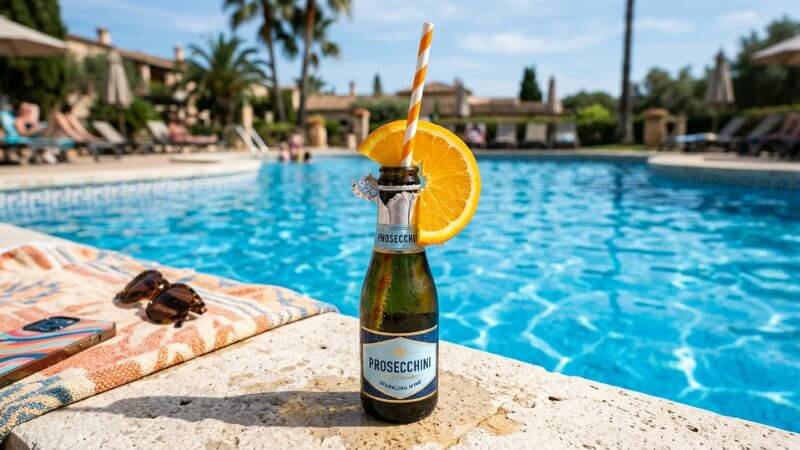
Simple Prosecco Spritz
Pour one mini Prosecchini over ice in a large glass. Add a 30 ml splash of Aperol or a squeeze of fresh orange juice. Stir gently once. Add an orange slice to garnish. Serve right away.
Variation: Swap Aperol for elderflower cordial for a lighter, floral version.
Peach Fizz
Pour one mini into a chilled glass. Add two tablespoons of peach nectar or peach puree. Drop in a thin peach slice. Stir once and serve.
Variation: Use mango nectar instead of peach for a tropical twist.
Cranberry Sparkler
Fill a glass halfway with crushed ice. Pour one mini Prosecchini over the ice. Add two tablespoons of cranberry juice and a squeeze of fresh lime. Garnish with a lime wheel or a few cranberries.
This cocktail works well for holiday parties — it looks festive and tastes refreshing.
Food pairing guide
Prosecchini’s bubbles and light acidity make it a natural match for many foods. The carbonation cuts through fat and salt, while the fruit notes complement lighter flavors.
| Food | Best Style |
|---|---|
| Shrimp, oysters, light seafood | Brut |
| Salty snacks, chips, pretzels | Extra Dry |
| Soft cheeses (brie, burrata) | Either style |
| Charcuterie and cured meats | Extra Dry |
| Fruit tarts, sorbet, light pastries | Extra Dry |
| Fried appetizers | Brut |
Avoid pairing with very spicy foods or heavy red meat dishes — the delicate flavor of Prosecco can get lost against bold, strong flavors.
How to Store, Chill, Open, and Serve Prosecchini Perfectly
Best serving temperature
Serve Prosecchini at 43–46°F (6–8°C). This temperature keeps the bubbles lively and the flavor crisp. Too warm and the bubbles die quickly. Too cold and the flavor mutes.
Chill time: 2–3 hours in the refrigerator, or 15 minutes in an ice bucket with water and ice.
Safe opening steps
Opening a sparkling wine bottle safely takes four steps:
- Hold the bottle at a 45-degree angle, pointing away from people and fragile items.
- Remove the foil cap and untwist the wire cage (called a muselet) while keeping your thumb over the cork.
- Grip the cork firmly with one hand and hold the bottle body with the other.
- Twist the bottle slowly — not the cork — while applying gentle upward pressure. The cork should ease out quietly. A loud pop wastes bubbles and risks spills.
Shelf life and storage
Unopened: 1–2 years when stored in a cool, dark place away from heat and direct light. Laying the bottle on its side is not necessary for synthetic or plastic corks, but works fine for natural cork closures.
After opening: Drink within 1–2 days. Use a wine stopper designed for sparkling wine to slow bubble loss. Keep in the refrigerator.
Flat bubbles after opening: If the wine goes flat after more than a day, it is still safe to drink — just less exciting. Use it in a cocktail or cook with it.
Are Mini Prosecco Bottles Worth It? Pros, Cons, and Sustainability
Pros
No leftover wine. Every mini bottle gets finished, so nothing goes flat or gets poured down the drain. Convenient for travel, outdoor events, and gifting. Same real Prosecco taste in a portable size. Easy to budget for events — you know exactly how much each guest costs.
Cons
Slightly higher cost per ounce than full bottles. Fewer brand options than the standard 750 ml size. Require chilling time just like any wine.
Waste savings math
Studies and consumer surveys suggest that 20–30% of wine in opened full bottles goes unfinished. One mini bottle has zero waste if you drink the whole thing. For a 50-person event, switching from full bottles to minis can eliminate several liters of wasted wine, saving both money and resources.
Sustainability angle
Glass bottles are fully recyclable. Smaller bottles mean less raw material per serving compared to larger bottles that go partially unfinished. Some brands have begun exploring lightweight glass options to reduce shipping weight and carbon footprint. Avoid single-use plastic mini bottles when possible — glass is the better choice for recycling.
When comparing carbon footprint, local or European-imported Prosecco in glass mini bottles is generally a reasonable choice from a sustainability standpoint, especially when you factor in zero waste from unfinished product.
Final recommendation
Buy mini Prosecco bottles if you host events, take drinks to outdoor settings, want individual gift items, or simply dislike the waste of partially-used full bottles.
Skip minis if you drink Prosecco regularly at home alone or with a partner and always finish a full bottle — in that case, a 750 ml bottle will cost you less per glass.
Frequently Asked Questions About Prosecchini
Is Prosecchini ham or wine?
It is wine. Prosecchini are small bottles of real Prosecco sparkling wine from Italy. Prosciuttini is a different product entirely — it is peppered, cured pork ham sold in delis and grocery stores. The two words sound alike but have nothing else in common.
How many calories are in a Prosecchini bottle? Is it healthy?
One 187 ml bottle contains roughly 120–130 calories and around 11% alcohol. It is lower in calories than most cocktails and similar to a small glass of white wine. Enjoy it occasionally and in moderation as part of a balanced approach to eating and drinking. It is not a health food, but it is one of the lighter alcoholic drinks available.
What is the difference between Prosecchini, Prosciuttini, and Champagne?
Prosciuttini is peppered cured ham — completely different from wine. Champagne is a French sparkling wine made in a slower, more complex bottle-fermentation process that produces richer, toastier flavors and comes at a higher price. Prosecchini is Italian Prosecco in a mini bottle, made using the Charmat tank method, giving it a lighter and fruitier character than Champagne.
Are mini Prosecco bottles eco-friendly?
They can be. Glass bottles are recyclable. The no-waste benefit (finishing every mini bottle you open vs. discarding unfinished wine from a big bottle) is a real sustainability advantage. Choose glass over plastic whenever possible. Some brands are also working on lighter packaging to reduce emissions during shipping.
What is the shelf life of Prosecchini?
Unopened, mini Prosecco lasts 1–2 years when stored in a cool, dark place. Once opened, drink it within 1–2 days with a sparkling wine stopper in the fridge. After that, the bubbles fade, though the wine remains safe to drink.
Can you drink Prosecchini every day?
One mini bottle equals one standard drink. Moderate alcohol consumption for most adults is defined as up to one drink per day for women and up to two for men, according to general health guidelines. Whether that fits your lifestyle depends on your personal health. Check with a doctor if you are unsure.
Where can I find the cheapest Prosecchini?
Zonin and La Marca minis are often the most affordable options, usually $3–$5 per bottle. Check Wine-Searcher for local pricing, or browse Amazon, Total Wine, and BevMo for current deals. Buying a case of 24 typically saves 10–20% versus buying single bottles.
Disclaimer: We write this guide for educational fun only. We do not give medical or legal advice. Some images on this page are created with AI tools to help show examples, but real product looks may vary. Always check with a doctor about your health or drinking choices, and obey local age laws.
You May Also Like:
Wifekivers Meaning: What This Viral 2026 Slang Really Means for Modern Relationships
Brumeblog com Review 2026: Is It Safe, Legit, or Just Another Thin Content Site?

Hi, I’m Emma Rose, the creative heart of Punstation.com. With a background in crafting hundreds of engaging guides and clever wordplay, I specialize in making complex information easy and fun to digest. Whether I’m diving into technical trends, lifestyle hacks, or my signature witty puns, my goal is to provide high-quality, research-backed content that solves problems and brings a smile to your face. For me, every topic—from tech to humor—is an opportunity to share clear, expert insights with a fresh perspective.